Nov 6, 2025
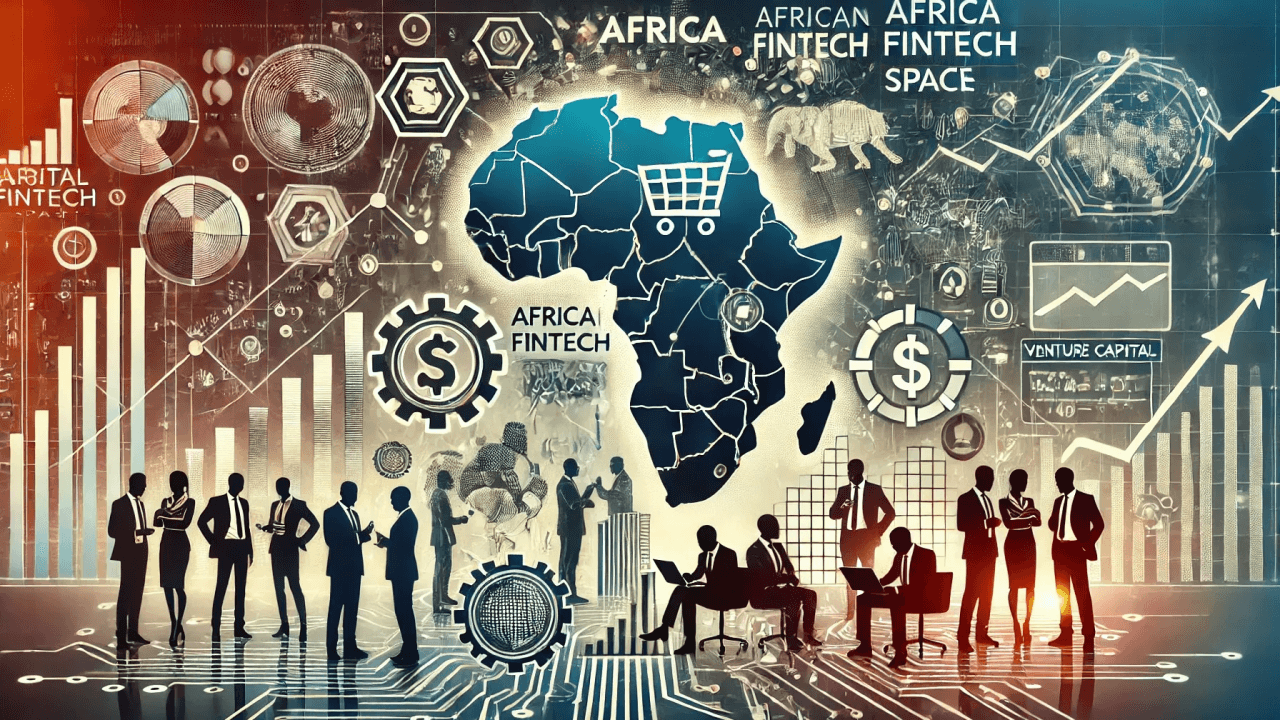
Africa's Digital Currency Revolution: How 54 Million Users are Rewriting the Rules of Global Finance
Zellow Analysis: Something extraordinary is happening in Africa's financial markets, and most of the world is only just beginning to notice. Nigeria now ranks first globally in stablecoin adoption and second in total digital asset usage, with 25.9 million users representing an 11.9% penetration rate. This isn't a Silicon Valley experiment or a developed market curiosity. This is real economic activity on a massive scale, driven by real needs that traditional finance simply couldn't address. Simultaneously, Africa accounts for 53% of global mobile money users, processing over $1 trillion in transactions during 2024 alone and contributing $190 billion to Sub-Saharan Africa's GDP. With over 54 million people across the continent engaging with digital assets and financial inclusion surging from 23.3% in 2011 to 58.2% in 2025, Africa is demonstrating something the rest of the world needs to understand: when you give people tools that actually solve their problems, adoption happens faster than anyone thought possible. For investors, fintech entrepreneurs, and financial institutions trying to understand where global finance is headed, the answer is increasingly clear. Look at Africa.
When Your Bank Account Lives in Your Phone: Africa's Mobile Money Takeover
Here's a number that should make traditional banks very uncomfortable: Africa accounts for 53% of global mobile money users. Not 53% of African mobile money users. Fifty-three per cent of all mobile money users worldwide are on this continent.
The Network that Banking Forgot to Build
Walk through any market in Nairobi, Lagos, or Accra, and you'll see something that looks like chaos to outsiders but operates with remarkable efficiency. Someone buying vegetables pulls out their phone, taps a few buttons, and the transaction is done. No card reader. No cash. No bank account required. The vendor, who might never have set foot in a bank branch, checks their phone and sees the payment instantly credited to their mobile money account.
This isn't happening in a few pilot programs or trendy urban neighbourhoods. This is how 283 million people across Africa conduct financial transactions every single month. More than 1.1 billion registered accounts. Over $1 trillion processed in 2024. And here's the number that really tells the story: 755 agents per 100,000 individuals providing cash-in and cash-out services.
Those agents are everywhere. The corner shop. The gas station. The pharmacy. They're the physical infrastructure that makes digital money work in economies where "cashless" doesn't mean what it means in London or New York. It means seamlessly moving between cash and digital value through a network of local businesses that are themselves earning transaction fees by providing the service.
When 95% Means Everyone Who Matters
East Africa didn't just adopt mobile money. It essentially solved payments as a problem. In Kenya, 95% of adults use mobile money. Think about that percentage. In a country where traditional banks struggled to reach rural populations, where building bank branches in remote areas made no economic sense, mobile money went everywhere the cellular network reached.
M-Pesa and Airtel Money didn't supplement the banking system in Kenya. They replaced it for everyday transactions. When nine out of ten adults use the same payment infrastructure, that's not adoption. That's transformation. Businesses don't ask "Do you have mobile money?" anymore. They assume it. Government services are built around it. Entire sectors of the economy function because mobile money solved the payment problem that banks never figured out how to address profitably.
The $190 Billion Question
Mobile money contributed $190 billion to Sub-Saharan Africa's GDP in 2024. That's not just transaction fees. That's the economic activity that happens because people who were previously locked out of the formal economy can now participate. The farmer can now receive payment for crops instantly instead of waiting for the buyer to travel to town with cash. The small business owner who can pay suppliers in other cities without the risk and cost of moving physical money. The worker who can send money home to family in rural areas without paying remittance fees that eat 7% or more of every transfer.
When you remove friction from an economy, productivity goes up. When you give people who were economically invisible the ability to transact formally, new markets emerge. That $190 billion represents economic activity that simply wouldn't exist in an all-cash, traditional-banking-only economy.
The Financial Inclusion Surge Nobody Saw Coming
In 2011, only 23.3% of adults in Sub-Saharan Africa had access to formal financial services. Banks shrugged. "Too expensive to serve," they said. "No business case for rural branches." "These populations don't have enough money to justify the cost of customer acquisition."
Then mobile money arrived and called their bluff.
When the Curve Goes Exponential
By 2021, financial inclusion had reached 49.3%. A decade of steady growth, roughly doubling the banked population. Impressive, right? But then look what happened next.
By 2025, inclusion hit 58.2%. That's nearly 9 percentage points in just four years, compared to about 2.6 percentage points annually in the previous decade. The curve didn't just continue climbing. It bent upward.
This is what happens when network effects kick in. When mobile money reaches critical mass, everyone needs it because everyone else has it. Businesses start requiring it. Government services get digitised. Paying with mobile money stops being a "nice to have alternative" and becomes the default way transactions happen.
Digital Wallets are Eating Traditional Banking
Here's the stat that should worry traditional banks most: digital wallets and payment cards now account for over half of all accounts in low and middle-income countries. Think about what that means. For most newly financially included Africans, their first formal financial relationship isn't with a bank. It's with a mobile money provider.
This creates path dependency that's going to shape African finance for decades. These users didn't learn finance by filling out forms at a bank branch. They learned it by tapping their phones. Their expectations about what financial services should look like, how quickly transactions should happen, what fees are reasonable, all of those mental models were formed by mobile money, not traditional banking.
When these users eventually do want credit, insurance, or investment products, they're not going to suddenly become comfortable with the bank branch experience. They're going to expect those services to work like mobile money: instant, accessible through their phones, and priced for their economic reality.
The Countries that Figured it Out First
Kenya gets all the attention as the mobile money success story, and for good reason. With 90.1% adult account ownership, Kenya essentially solved financial inclusion as a problem. But Kenya isn't alone.
The Replication Formula
Ghana, Mauritius, South Africa, and Senegal have all achieved major gains using remarkably similar playbooks: government digitisation initiatives that encouraged rather than restricted mobile money, competitive mobile wallet markets where multiple providers drove innovation and kept prices down, and expanding internet connectivity that enabled progressively more sophisticated services beyond basic transfers.
What's significant isn't just that these countries succeeded. It's that they succeeded across very different economic and regulatory contexts. Kenya and Senegal have different income levels, different regulatory philosophies, and different banking sector structures. Yet mobile money worked in both places when the core enablers aligned.
This suggests mobile money success is replicable, not a one-off lucky break that worked in Kenya because of unique local conditions. The formula is now proven across enough markets that other African countries can look at these examples and know what conditions they need to create for mobile money to thrive.
Who Benefits Most When Finance Gets Democratised
Digital payments are increasingly surpassing traditional banking channels in these markets, but the really transformative impact is on who now has financial access. Women, rural populations, and previously marginalised groups are gaining access to financial services at rates that traditional banking never achieved.
This isn't just about inclusion as a social good, though it certainly is that. This is about massive market expansion. When you bring tens of millions of people into the formal economy who were previously conducting all transactions in cash, you create customers for every business in the economy. The woman in a rural village who now has a mobile money account isn't just included. She's a customer who can now buy from businesses she couldn't reach before, sell to markets she couldn't access, and accumulate savings that can turn into investment capital.
Why Millions of Africans are Choosing Dollar Stablecoins Over Their Own Currency
Nigeria's financial markets are telling a story that should make every central bank in an emerging market pay very close attention. Nigeria ranks first globally in stablecoin adoption. Not first in Africa. First in the world.
When Your Currency Can't Be Trusted, People Find Alternatives
Walk into an electronics shop in Lagos, and there's a decent chance the owner is pricing inventory in their head in dollars, not naira. Ask them how they manage the risk of naira devaluation eating their profit margins between when they pay suppliers and when they sell products, and increasingly, the answer involves stablecoins.
This isn't ideology. Nobody is adopting stablecoins because they read Bitcoin white papers and got excited about decentralisation. They're adopting stablecoins because the naira lost half its value in a year, and when your local currency is that unstable, holding dollars in any form you can access becomes financial survival, not speculation.
Nigeria's 25.9 million digital asset users, representing an 11.9% penetration rate, didn't appear because of some cryptocurrency fad. They appeared because people needed access to dollar-denominated value, and traditional banking either couldn't provide it or made it prohibitively expensive.
The Three Problems Stablecoins Actually Solve
Here's what's actually driving stablecoin adoption across Africa, and why 54 million people now engage with digital assets: access to dollar-denominated value without bank accounts or foreign exchange approvals in markets where capital controls mean getting dollars through official channels ranges from difficult to impossible. A small business owner in Nigeria can hold working capital in USDT, protecting their business from currency devaluation, without needing to navigate forex restrictions or explain to a bank why they need dollar access.
Second, stablecoins enable hedging against local currency volatility. When inflation is running at 20%, 30%, or even higher, every day you hold local currency is a day you're losing purchasing power. Stablecoins offer a way to preserve value that's accessible to ordinary people, not just those wealthy enough to hold offshore bank accounts.
Third, stablecoins facilitate cross-border transactions at a fraction of traditional costs. The average cost of sending a $200 remittance to Africa is 7.4%. With stablecoins, that same transaction can cost under 2%, and it settles in minutes instead of days. For businesses engaged in international trade or individuals receiving remittances from family abroad, stablecoins aren't a novelty. They're a dramatically better product.
Africa's 9.3% Stablecoin Adoption Rate Tells the Real Story
Sub-Saharan Africa's 9.3% stablecoin adoption rate is higher than cryptocurrency adoption rates in most developed markets, where the typical range is 3% to 7%. This difference is telling. In developed markets, cryptocurrency adoption is often driven by speculation or ideological commitment to decentralisation. In Africa, stablecoin adoption is driven by practical economic necessity.
People aren't buying stablecoins hoping the price goes up. They're buying stablecoins hoping the price stays stable, which is more than they can say about their local currency. That's a fundamentally different use case, and it's why African stablecoin adoption is likely to prove more sustainable than crypto speculation cycles in other markets.
How Regulators are Scrambling to Keep up with Reality
African regulators are facing a challenge that's both urgent and unprecedented: how do you regulate financial innovation that's already being used by millions of people, when the traditional regulatory playbook assumes you establish rules before adoption happens?
Botswana and Namibia: The Methodical Approach
Botswana looked at the exploding digital asset usage across the continent and decided to get ahead of it before it became a crisis. The Virtual Assets Act 2025 gave the Non-Bank Financial Institutions Regulatory Authority clear authority to license Virtual Asset Service Providers, established investor protections, and implemented the FATF Travel Rule to align with global anti-money laundering standards.
Namibia took a similar path with its Virtual Assets Act 2023, but added an innovation: tiered licensing. Small operators serving local markets face lighter compliance requirements than large-scale exchanges handling billions in customer funds. It's a pragmatic recognition that regulatory burden should match business risk and scale, not one-size-fits-all rules that either under-regulate giants or crush small innovators with compliance costs.
Both countries' approaches share a philosophy: establish clear rules before the market gets too chaotic, but make those rules calibrated to actual risks rather than hypothetical fears.
Central Africa: When Too Many Regulators Create Chaos
Then there's the Central African Economic and Monetary Community, where regulatory fragmentation is turning what could be a regional digital asset market into a compliance nightmare. COSUMAF, COBAC, BEAC, and UMAC all regulate pieces of the digital asset space, but with divergent approaches that make it nearly impossible to build a business that complies with everyone.
COBAC restricts banks from digital asset activities entirely to protect monetary stability. Reasonable concern, perhaps, but it means licensed VASPs struggle to get bank accounts to handle fiat currency operations. COSUMAF has formalized VASP licensing with AML and risk assessment standards, which is great, except when those standards conflict with what other regional authorities require.
The Central African Republic's brief flirtation with Bitcoin as legal tender quickly reversed when regional partners pushed back, illustrating what happens when one country tries to move too fast without regional coordination. The Sango Coin launch and subsequent struggles demonstrated that good intentions and blockchain enthusiasm are no substitute for infrastructure, institutional capacity, and regional policy alignment.
Nigeria: Innovation Sandboxes as Regulatory Strategy
Nigeria is trying something different. Rather than attempting to write perfect regulations for a technology that's still evolving, the Securities and Exchange Commission established the Accelerated Regulatory Incubation Program and Regulatory Incubation frameworks that allow real-time testing of innovative products under supervision.
The sandbox approach acknowledges a truth many regulators don't want to admit: you can't know what regulations make sense until you see how the technology actually gets used. By allowing controlled experimentation, Nigeria gets to develop evidence-based regulations informed by actual market experience rather than hypothetical concerns.
It's not perfect. The regulations are still evolving rapidly enough that businesses face uncertainty. But it's arguably better than the alternative of either prohibiting innovation until regulators feel comfortable or allowing completely unregulated growth until a crisis forces reactive regulation.
The Banking Access Problem Nobody's Solved Yet
Here's a problem showing up everywhere: licensed VASPs that jumped through all the regulatory hoops to get official approval, then discovered banks still won't give them accounts.
Mauritius created the VAITOS Act 2022 and established clear licensing frameworks through the Financial Services Commission. Great. Regulatory clarity achieved. Except licensed VASPs still struggle to access banking services because banks view digital assets as reputational risk, even when regulators have explicitly blessed the business.
This disconnect between regulatory licensing and the banking sector's willingness to serve digital asset businesses creates an absurd situation where you can be fully legal, fully licensed, and still unable to operate effectively because you can't access basic banking services to convert between fiat and crypto.
Solving this requires either forcing banks to serve licensed VASPs, creating specialised digital asset banks, or finding entirely new infrastructure that doesn't depend on traditional banking relationships. Some markets are experimenting with all three approaches, but nobody's cracked it yet.
The Places Financial Inclusion Still Hasn't Reached
For all the success stories, honesty requires acknowledging where mobile money and digital assets haven't yet solved financial exclusion.
The Stubborn 40% in Eleven Countries
In at least eleven African countries, fewer than 40% of adults have access to formal financial services. Niger, Chad, Madagascar, and Mauritania illustrate why infrastructure alone isn't enough.
These markets face combinations of challenges that make even mobile money struggle: mobile network coverage that's still patchy in rural areas, regulatory environments that restrict rather than enable mobile money, telecommunications markets dominated by monopolies or weak duopolies without the competitive pressure that drives innovation, and poverty so severe that even low-cost financial services remain out of reach for the poorest populations.
Algeria's Paradox: Access Without Usage
Then there's the puzzle of countries like Algeria, where mobile phone and internet access are nearly universal, yet formal financial inclusion remains low. This access-to-usage gap demonstrates that technology availability alone doesn't automatically translate into financial inclusion.
The barriers are cultural and institutional as much as technical: low trust in financial institutions, limited literacy about financial products and how to use them safely, economic conditions where irregular income and survival economics make formal financial relationships seem irrelevant, and social norms where cash remains king and digital transactions are viewed with suspicion.
Solving these challenges requires more than better technology or lower prices. It requires building trust, financial literacy, and demonstrating concrete benefits that overcome ingrained habits and preferences for cash transactions.
Zellow Strategic Framework: The Dual-Rail Future Of African Finance
The mistake most analysis makes is treating mobile money and digital assets as competitors fighting for the same users and use cases. The reality emerging across Africa is more interesting: they're complementary rails serving different needs, and the biggest opportunities exist at the intersection.
Rail One: Mobile Money for Everything Local
Mobile money's 1.1 billion registered accounts, 283 million monthly active users, and $1 trillion in annual transaction volume make it Africa's primary digital finance infrastructure for domestic payments. This rail dominates and will continue dominating for everyday transactions: paying for groceries, sending money to family, paying utility bills, and receiving wages.
Investment opportunities on this rail include mobile money operators expanding coverage into underserved markets, businesses building financial services on top of mobile money APIs like savings, credit, and insurance products, infrastructure supporting agent networks that provide cash-in and cash-out services, and interoperability platforms connecting different mobile money providers.
Mobile money's competitive advantages are decisive for domestic use: regulatory acceptance and government integration, massive existing user bases with strong network effects, seamless integration with cash through agent networks, and user interfaces optimised for feature phones and low digital literacy.
But mobile money has fundamental limitations it can't overcome: transactions remain primarily domestic with limited cross-border capability, exposure to local currency volatility affects all users, capital controls in some markets limit mobile money's utility for certain use cases, and the lack of dollar-denominated services makes mobile money unsuitable for inflation hedging or international trade.
Rail Two: Stablecoins for Dollars and Cross-Border
Stablecoins' 54 million users across Africa and 9.3% adoption rate in Sub-Saharan Africa establish a parallel rail addressing use cases that mobile money can't serve effectively. This rail is winning for specific scenarios: preserving purchasing power during high inflation, conducting international trade and remittances, and accessing dollar-denominated savings or working capital.
Investment opportunities on this rail include stablecoin on-ramps and off-ramps connecting fiat and crypto, digital asset exchanges serving African markets with appropriate infrastructure and compliance, businesses enabling stablecoin payments for cross-border commerce, and custody and security solutions protecting digital asset holdings.
Stablecoins' competitive advantages are equally decisive for their use cases: dollar denomination protects against local currency volatility, borderless transferability enables cross-border transactions, independence from capital controls and forex restrictions, and transaction costs are often dramatically lower than traditional remittance or trade finance.
But stablecoins face their own severe limitations: regulatory uncertainty in many markets creates legal risk, limited merchant acceptance compared to mobile money restricts day-to-day utility, technical barriers and private key management requirements exclude less sophisticated users, and fiat on-ramps and off-ramps remain expensive or inconvenient in many markets.
The Integration Layer is Where the Magic Happens
The optimal model isn't mobile money versus stablecoins. It's systems where users seamlessly move between both rails based on which better serves their immediate need.
Imagine a small business owner in Lagos: they receive local payments through mobile money because that's what their customers use, convert excess working capital to USDT to protect against naira devaluation, pay international suppliers using stablecoins to avoid high forex markups and delays, and convert back to mobile money when they need to pay local expenses or employees.
That business owner doesn't care about the philosophical debate between mobile money and crypto. They care about having tools that solve their problems. The businesses that will capture the most value are those building the bridges: unified wallets that hold both mobile money and stablecoins, instant conversion services moving between rails at competitive rates, merchant services accepting payment in either form and settling in whatever the merchant prefers, and intelligent routing that automatically selects the optimal rail for each transaction based on cost and speed.
This integration layer is where fintech innovation is focused right now, and it's where the biggest opportunities exist for new entrants who can solve the friction problems that currently make moving between rails clunky and expensive.
Why Africa's Digital Finance Revolution Matters to Everyone
Africa didn't set out to become a laboratory for the future of money. It happened because traditional finance failed to serve billions of people, and technology provided alternative solutions that actually worked.
The Mobile Money Foundation That Changed Everything
The $190 billion GDP contribution and $1 trillion transaction volume of mobile money demonstrate commercial viability at scale. This isn't a charity project or development initiative. This is a profitable infrastructure that solved real problems and generated genuine economic returns.
Investment opportunities include mobile network operators expanding financial services beyond basic payments, agent network optimisation technology improving reliability and reducing costs, and platforms building credit, savings, insurance, and investment products on mobile money rails.
Returns are characterized by steady transaction fee income growing with economic activity and digital penetration. Less volatile than speculative technology sectors, but with growth rates that reflect the ongoing transition from cash to digital.
The Stablecoin Surge that Surprised Everyone
The 54 million user base and Nigeria's global leadership in stablecoin adoption demonstrate market demand that's being ignored by traditional finance at their peril. When people in unstable currency environments discover they can access dollar-denominated digital assets through their phones, adoption happens fast.
Investment opportunities include licensed digital asset exchanges serving African markets, stablecoin payment processors enabling business-to-business and cross-border commerce, infrastructure connecting crypto rails with traditional banking and mobile money, and businesses facilitating international trade using stablecoins to reduce costs and friction.
Returns are potentially higher than mobile money infrastructure but come with greater regulatory risk as frameworks continue evolving. The companies that navigate this uncertainty and build compliant, scalable businesses will capture outsized value.
The Fintech Integration Play
The need to connect mobile money and stablecoin rails, facilitate fiat to crypto conversion, and provide unified user experiences creates massive opportunities for fintech platforms operating between traditional and digital asset systems.
These businesses benefit from growth in both underlying rails without needing to build either rail themselves. They're building the connective tissue that makes the dual-rail system function as an integrated network rather than two separate systems that users must navigate independently.
Competition will come from rail operators integrating vertically, which means the defensible advantage for integration layer businesses is superior user experience, better pricing through aggregation, and faster innovation cycles than larger incumbent infrastructure providers.
The Future is Being Built in Africa Right Now
Africa's digital finance transformation isn't a story about the developing world catching up to developed markets. It's a story about leapfrogging past legacy infrastructure to build something better suited to how people actually want to transact in a mobile-first, increasingly digital global economy.
The combination of mobile money providing foundational infrastructure, stablecoins addressing specific high-value use cases, and evolving regulatory frameworks that are trying to enable rather than stifle innovation positions Africa as the laboratory where the future of money is being figured out in real time.
For investors, entrepreneurs, and financial institutions trying to understand where global finance is headed, the answer increasingly isn't in Silicon Valley boardrooms or New York trading floors. It's in the mobile phones of 283 million active mobile money users and 54 million digital asset adopters across Africa who are voting with their wallets for financial systems that actually serve their needs.
The financial inclusion surge from 23.3% in 2011 to 58.2% in 2025 isn't slowing down. The $1 trillion in mobile money transactions isn't a peak, it's a plateau that will be surpassed. Nigeria's global leadership in stablecoin adoption isn't an anomaly; it's a preview of what happens when legacy financial systems fail to serve users who then find better alternatives.
Africa isn't the future of finance because technologists decided it should be. Africa is the future of finance because hundreds of millions of people chose tools that worked for them, and those choices are reshaping what money means and how it moves around the world. The rest of the world is just starting to notice.
More Insight from Real Life Users










Insights that Drive Change
Empowering smarter decisions across business, policy, and research