
Nov 6, 2025
African Mobility Startups: $178M Funding Driving Electric Vehicles, Ride-Hailing, and Urban Transport Innovation
Zellow Analysis: Africa's mobility sector is experiencing transformation driven by rapid urbanization, digital innovation, and growing middle-class demand for efficient, affordable transport solutions. The continent's mobility market, valued at $6.9 billion in 2023, is projected to surpass $18 billion by 2035, with shared mobility revenues forecast to reach $29 billion by 2025 and exceed $41 billion by 2030. In 2024, African mobility startups attracted more than $178 million in early funding, with companies like BasiGo, Ampersand, and AUTO24.africa advancing electric buses, motorcycles, and digital vehicle marketplaces. The ride-hailing market alone is projected to grow from $1.8 billion in 2023 to $4.7 billion by 2035 at 8% annual growth rate, while the EV market is expected to expand from $2.8 billion in 2023 to $7 billion by 2028. With Africa remaining under-motorised at only 51 vehicles per 1,000 people compared to global averages, and cities expanding twice as fast as the global rate, understanding which mobility models achieve commercial viability while addressing infrastructure constraints is essential for investors, entrepreneurs, and policymakers navigating Africa's transport transformation and the $41 billion shared mobility opportunity by 2030.
What is Driving Africa's $18 Billion Mobility Market Transformation?
Africa's mobility sector transformation stems from converging forces creating conditions where traditional transport models fail while technology-enabled alternatives thrive despite infrastructure challenges.
Rapid Urbanisation Fuels Africa’s Transport Demand
African cities are expanding twice as fast as the global average, creating increasing demand for flexible mobility options that traditional public transit and private vehicle ownership cannot adequately address. This urbanization pace means infrastructure development lags behind population concentration, creating transportation bottlenecks that worsen congestion, increase commute times, and reduce economic productivity.
The under-motorization opportunity: The continent remains under-motorized, with only 51 vehicles per 1,000 people compared to over 800 per 1,000 in developed markets. This gap represents not market failure but rather an opportunity for mobility services to bypass conventional ownership models and leap directly into cleaner, technology-enabled transport solutions.
Young, Mobile-First Population Accelerates Digital Mobility
Africa's young, tech-savvy population is demanding accessible, effective, and sustainable transport solutions delivered through mobile applications rather than traditional infrastructure. With mobile phone penetration exceeding 80% in urban areas and smartphone adoption accelerating, mobility platforms can reach customers directly without requiring physical branch networks or call centers.
The digital-first advantage: This mobile-first population adoption enables African mobility startups to scale faster than historical transport companies that required decades building physical infrastructure before achieving mass market penetration. Digital platforms can launch in new cities within months rather than the years required for traditional transport operators.
Government Policies Driving EV Adoption Across Africa
Electrification is central to Africa's mobility shift, with electric buses spreading across East Africa and two- and three-wheeled electric vehicles gaining traction in Rwanda, Kenya, and Benin. Government policies, including EV tax incentives and investment in charging infrastructure, are accelerating commercial adoption, particularly in public and shared transportation fleets.
Innovative financing unlocking adoption: Pay-as-you-go schemes are lowering entry barriers and accelerating EV adoption by addressing the high upfront cost challenge that traditional purchase models create. Rather than requiring $15,000-$30,000 upfront for an electric vehicle purchase, pay-as-you-go enables drivers to pay weekly or monthly amounts aligned with their earning patterns.
$178 Million Investment Wave: African Mobility Startups to Watch
In 2024, African mobility startups attracted more than $178 million in early funding, demonstrating investor confidence that technology-enabled transport solutions can achieve commercial viability in African markets despite infrastructure constraints.
Leading Startups and Their Scalable Models
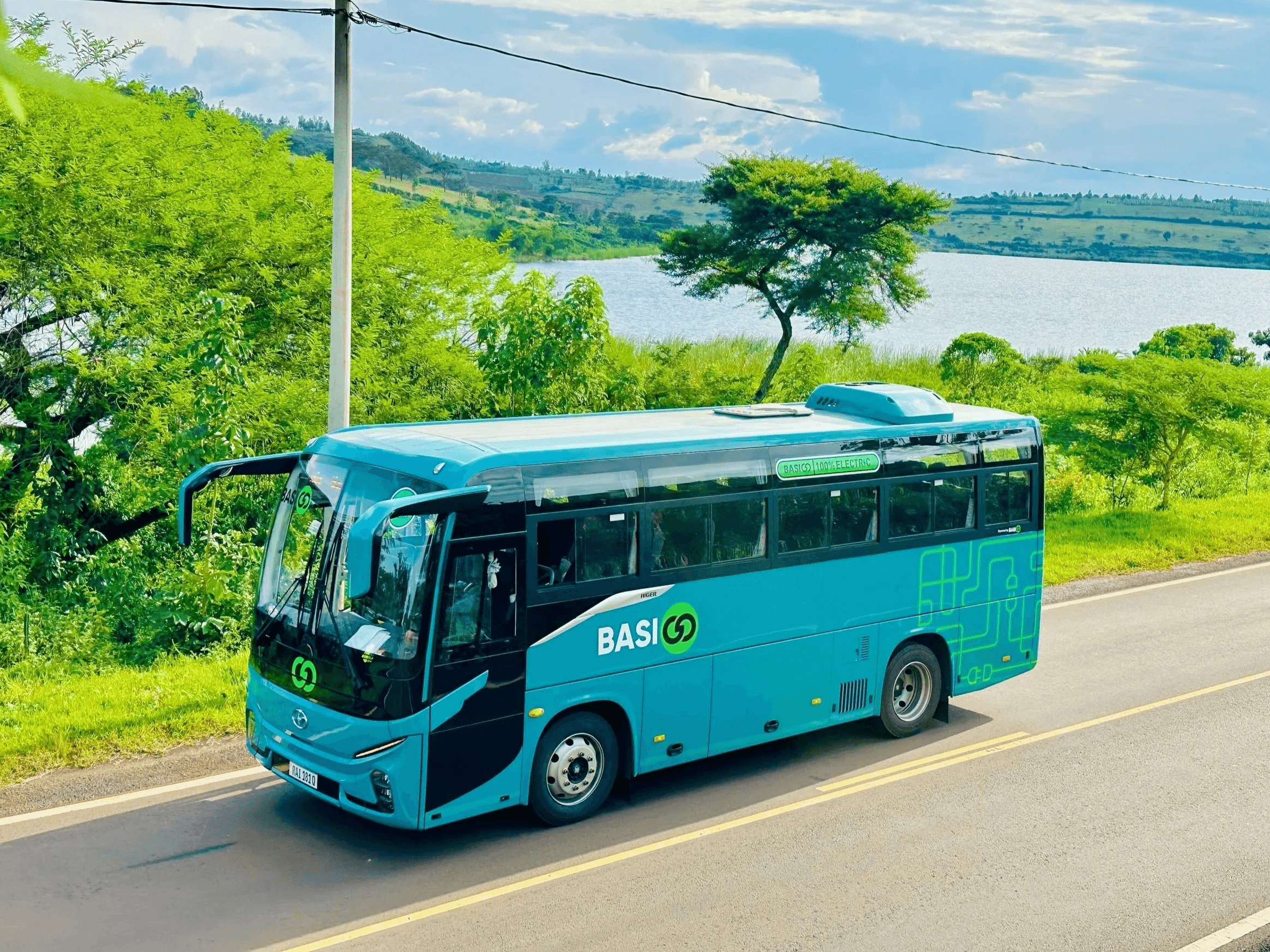
BasiGo: Advancing electric buses across East Africa through subscription models where transport operators pay per kilometre rather than purchasing buses outright. This dramatically reduces capital requirements for fleet electrification while enabling BasiGo to maintain ownership and operational control of battery assets.
Ampersand: Providing electric motorcycles through battery-swap networks that address range anxiety and charging time concerns. Riders subscribe to battery-swap services, exchanging depleted batteries for charged ones at swap stations in under 60 seconds, eliminating the 4-6 hour charging time that would make electric motorcycles commercially unviable for commercial riders needing continuous operation.
AUTO24.africa: Operating a digital vehicle marketplace connecting buyers and sellers while providing financing, insurance, and after-sales services. This integrated platform approach captures value across multiple transaction stages rather than merely facilitating vehicle listings.
Investment concentration: Regional hubs are emerging across Kenya, Nigeria, and South Africa, supported by renewable energy initiatives and local manufacturing partnerships. Large-scale fleet deployments and early-stage pilots are expanding rapidly, with over $100 million in regional investments reflecting policy alignment, private-sector engagement, and technological innovation.
Ride-Hailing: Africa's $4.7 Billion Market Opportunity by 2035
Ride-hailing remains one of Africa's most dynamic transport segments, demonstrating commercial viability while addressing urban mobility challenges that traditional taxi services and inadequate public transit fail to solve.
Market Size and Growth Projections
The ride-hailing market is projected to grow from $1.8 billion in 2023 to $4.7 billion by 2035 at an annual rate of 8%, significantly exceeding the global average growth rate of 4-5%. This premium growth reflects both market expansion as more African cities achieve sufficient density and smartphone penetration to support ride-hailing, and deepening penetration within existing markets as service quality improves and pricing becomes more competitive.
Demand outpacing supply: Demand has outpaced driver availability in major markets, raising fares and creating opportunities for carpooling and motorbike-hailing services. This supply constraint reflects both the capital requirements for drivers to acquire vehicles and regulatory uncertainties that make some potential drivers hesitant to commit to ride-hailing full-time.
Public-Private Partnership Models
Public-private partnerships, such as Lagos State's "Lagos Ride" initiative, which deployed 1,000 vehicles in collaboration with Chinese partners, demonstrate how governments can accelerate ride-hailing adoption while capturing some economic benefits through ownership stakes or preferential treatment for locally-supported platforms.
Regulatory frameworks shaping markets: Commission caps in Kenya and other regulatory interventions continue to influence market expansion, underscoring the importance of policy alignment for sustained growth. When regulators impose commission limits protecting driver earnings, platforms must achieve profitability through volume rather than taking larger percentages per transaction.
Car-Sharing, Subscriptions, and Flexible Mobility Models
Car-sharing, subscription services, and rental models are reshaping mobility economics by providing flexibility at lower total cost than ownership while generating recurring revenue streams for mobility companies.
South Africa Leading Adoption
South Africa leads adoption, with 30% of consumers subscribing to auto services, exceeding the global average of 15-20%. This high subscription rate reflects both the country's relatively high vehicle costs making ownership expensive, and the developed financial services infrastructure enabling subscription payment processing.
Market projections: The subscription market is projected to grow from $57 million in 2023 to $103 million by 2035, representing 81% growth but from a small base. The automobile rental industry, supported by tourism recovery and digital fleet management, is expected to rise from $4.1 billion to $7.4 billion over the same period.
Car-sharing expanding gradually: Car-sharing services are projected to reach $12 million by 2035, reflecting growing demand for flexible mobility solutions, but limited by the need for dense urban environments and sophisticated fleet management technology to achieve unit economics that justify operations.
Micromobility Solutions: Two- and Three-Wheelers for Last-Mile Transport
Two- and three-wheeled transport solutions, including e-bikes and e-motorcycles, are increasingly popular across Africa, serving delivery services, commercial fleets, and urban commuters facing congested roads where motorcycles and bikes can navigate traffic more efficiently than cars.
Commercial Fleets Driving Adoption
Markets in Rwanda, Kenya, and Benin are leading adoption, with commercial fleets spearheading uptake of micromobility solutions. Delivery companies, ride-hailing motorcycles, and logistics providers represent the primary customers because their high daily utilisation rates enable faster payback on electric vehicle premiums compared to gasoline equivalents.
Digital financing enabling scale: These solutions are gaining traction through digital financing models, particularly pay-as-you-go schemes, which lower entry barriers and accelerate adoption by allowing drivers to pay for vehicles through a portion of their daily earnings rather than requiring lump-sum purchases or traditional bank loans that most informal sector workers cannot access.
Electric Vehicle Market in Africa: From $2.8B to $7B by 2028
The EV market is projected to grow from $2.8 billion in 2023 to $7 billion by 2028, representing 150% growth in just five years and positioning Africa to establish a transport ecosystem grounded in sustainability, technology, and shared access.
Government Incentives and Charging Infrastructure Challenges
Government incentives, including ICE (internal combustion engine) import bans, tax breaks, and investment in charging infrastructure, are accelerating adoption. Rwanda's ICE import ban for motorcycles, Kenya's reduced import duties on electric vehicles, and various countries' VAT exemptions on EVs demonstrate policy coordination supporting electrification.
Charging infrastructure challenge: While charging stations are increasingly available, the capacity of national grids is often insufficient to support large-scale e-mobility deployment. Energy infrastructure remains a major constraint, with unstable grids and high electricity costs limiting the scalability of electric vehicles across countries such as South Africa and Nigeria.
Localized solutions emerging: Initiatives like uYilo are exploring localized solutions such as microgrids, which leverage renewable energy to provide reliable EV charging while mitigating strain on central systems. Solar-powered charging stations enable EV operations even in areas with unreliable grid electricity.
Case Studies: Three Mobility Models Achieving Scale in Africa
BuuPass Kenya: Digital Bus Ticketing Platform
BuuPass has emerged as a leading digital mobility platform by connecting users to 13 transport operators across key domestic and regional routes. The B2B2C marketplace enables travellers to search, compare, and book tickets while providing operators with SaaS tools to manage operations, inventory, and sales.
Scale achieved: Since its launch in 2016, BuuPass has facilitated over 16 million ticket sales, generating more than $100 million in gross transaction value. The platform's expansion into parcel delivery and international routes highlights the growing convergence of passenger mobility and logistics across East Africa.
Moove Nigeria: Revenue-Based Vehicle Financing
Launched in 2020, Moove provides revenue-based vehicle financing for ride-hailing, delivery, and logistics drivers, enabling them to acquire new vehicles using a portion of their weekly earnings. With $100 million raised in a recent funding round, Moove plans to bring 45,000 new cars to its platform and expand operations into 16 markets globally by 2025.
Why this model works: Traditional banks won't lend to informal sector drivers lacking payslips, credit history, or collateral. Moove's revenue-based model uses ride-hailing platform data to assess creditworthiness and structures repayments as a percentage of weekly earnings, aligning payments with actual income.
Morocco's Mobility Ecosystem: Diversity of Innovation
Companies such as Cathedis, CloudFret, and Colis.ma are transforming last-mile delivery, cross-border logistics, and parcel services. ENAKL and Weego provide innovative urban transport solutions integrating bus-sharing, multimodal transit, and real-time mobility services. Electric mobility startups like POGO and VelyVelo offer flexible EV rentals and e-bike fleet leasing for delivery and urban commuting.
Support infrastructure: These ventures are supported by venture capital, accelerator programs, and public-private partnerships, positioning them to scale operations regionally and contribute to a more sustainable, digitally connected transport ecosystem.
Zellow's African Mobility Market Insights: The Three-Layer Mobility Stack Strategic Framework
Understanding Africa's mobility transformation requires recognizing three interdependent layers where different business models capture value.
Layer One: Asset Ownership and Fleet Operations
Companies like BasiGo and Ampersand own vehicle assets and operate fleets, capturing value through subscription fees, battery-swap revenues, or usage-based pricing. Capital-intensive but defensible through physical asset control and operational expertise.
Layer Two: Platform and Marketplace Services
BuuPass, ride-hailing platforms, and digital vehicle marketplaces operate as intermediaries connecting supply and demand. Lower capital requirements, but dependent on achieving liquidity and network effects before competitors.
Layer Three: Enabling Services and Infrastructure
Moove's financing, charging infrastructure providers, and fleet management software enable mobility operations without directly providing transport. Highest margins but dependent on Layer One and Two achieving scale.
Zellow Observations: The Hidden Market Dynamics in African Mobility
The 51 Vehicles Per 1,000 Paradox: Africa's under-motorisation at 51 vehicles per 1,000 people is often cited as a growth opportunity, but it may represent an optimal outcome rather than a deficit. Shared mobility and public transit can provide superior transportation access at lower capital cost and environmental impact than private vehicle ownership, achieving developed market ratios of 800 per 1,000.
The EV Leapfrog Reality Check: While Africa can theoretically bypass internal combustion engine infrastructure and leap directly to electric vehicles, this requires solving the chicken-and-egg problem where drivers won't buy EVs without charging infrastructure, and infrastructure investors won't build charging stations without EV adoption. Pay-as-you-go and battery-swap models solve this by bundling vehicle and energy infrastructure.
The Informal Economy Integration Challenge: Most African transport operates informally through matatus, danfos, and informal taxi services. Successful mobility platforms must integrate rather than replace informal operators, capturing transaction value while preserving the employment and entrepreneurial opportunities informal transport provides.
Frequently Asked Questions: African Mobility Sector
How big is Africa's mobility market?
Africa's mobility market was valued at $6.9 billion in 2023 and is projected to surpass $18 billion by 2035, with shared mobility specifically forecast to reach $41 billion by 2030.
What is driving electric vehicle adoption in Africa?
Government incentives, including tax breaks and ICE import bans, innovative financing through pay-as-you-go schemes, and commercial fleet adoption driven by lower operating costs compared to gasoline vehicles.
Which African countries lead in mobility innovation?
Kenya, Nigeria, South Africa, Rwanda, and Morocco lead through a combination of startup activity, supportive policies, and infrastructure investment.
Strategic success requires infrastructure investment, policy alignment, and contextual adaptation addressing Africa's distinct urban patterns, informal economies, and mobile-first customers across 54 countries.
More Insight from Real Life Users

























Insights that Drive Change
Empowering smarter decisions across business, policy, and research